by TechNova | Oct 21, 2025 | Tech Insights
Ever find yourself staring at a restaurant menu, squinting at dish names like “Bistecca alla Fiorentina” or “Takoyaki,” thinking, what on earth does this actually look like? Same here. That’s exactly why I got excited when I heard the Yelp AI Assistant shows you what dishes look like. I mean—finally, right?
This new feature from the Yelp AI Assistant feels like magic if you’re anything like me: a curious eater who occasionally plays it safe simply because I don’t want to end up with something I didn’t expect. Now, Yelp’s blending smart image recognition and generative AI to paint a picture—not literally, but almost—of what your food will look like before you order it.
How the Yelp AI Assistant Makes Dining Out Smarter
Let me set the scene. You’re standing in a cozy little restaurant downtown. You’ve heard the food’s amazing. The menu just landed in your hands. It’s full of culinary poetry, but you’re stuck. Do you gamble on the “Chef’s Signature Tostada Tower”? Or play it safe with the burger?
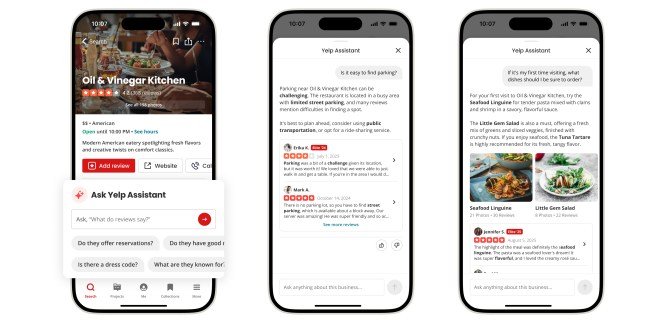
That’s where the Yelp AI Assistant comes in. Using your phone’s camera, you can now scan a physical menu, and it’ll instantly pull up photos of each dish—real images from previous diners, not some staged marketing shots. It also offers brief, crowdsourced descriptions. So you’re not just looking at a name anymore. You’re seeing textures, sauces, portion sizes. You’re stepping into someone else’s dining experience.
I tried this recently while grabbing dinner in Chinatown. I scanned the menu, hovered over “Xiao Long Bao,” and just like that—bam!—up pops a beautiful shot of juicy dumplings with a thin skin shimmering from steam. I’d always heard about them but never knew what they looked like lined up in a bamboo basket. Sold!
It’s Like Having a Foodie Friend in Your Pocket
Here’s what makes this feature more than just a gimmick: it removes the guesswork from eating out. That hesitation—the dance between “Do I ask the waiter what this is?” and “Should I just stick to what I know?”—kind of melts away.
Instead of guessing or relying on vague menu blurbs, you’re handed a visual gallery of what you’re about to eat. It’s not just helpful—it’s empowering. I’m a visual learner, always have been. I need to see it to commit. The Yelp AI Assistant gets me. It’s made to solve real-world indecisiveness with intuitive tech.
Inside Yelp’s New Menu Scanning Magic
So how does this thing actually work? Yelp quietly upgraded their AI assistant with the ability to break down printed or digital menus using a new visual parsing tool. You just point your phone’s camera, and it reads the text like a pro, highlighting dish names and pulling in authentic photos uploaded by past diners.
The photos aren’t just random, either. They’re curated through AI and verified with user reviews, so the assistant tries to find the most representative shots—no filters, no misleading angles. Just pics that show the dish in its real form. There’s something comforting about that honesty, especially in a world overflowing with retouched food photography.
And it goes beyond just imagery. The Yelp AI Assistant also suggests menu highlights based on what customers talk about most. If everyone’s raving about the butter chicken or saying “the tiramisu tastes like a cloud,” you’re gonna know.
The Real-World Impact on My Food Choices
Let me tell you—it’s changed my dining game completely.
- Last weekend at a tapas bar, I finally ordered octopus because I saw what it looked like first. It was grilled with smoky paprika and looked divine. It was also delicious.
- On a solo lunch run, I skipped my go-to sandwich when the assistant nudged me toward a grain bowl that was way more colorful (and satisfying) than I imagined.
- Even when I was traveling, it helped bridge that awkward moment when I couldn’t totally interpret a menu in another language.
There’s something really special about having confidence in what you’re about to experience. Seeing a dish before it hits your table honestly lets you enjoy the moment more fully. It takes away that undercurrent of uncertainty and replaces it with anticipation.
Why the Yelp AI Assistant Is a Game Changer
Yelp isn’t the first to experiment with AI, but they’re one of the few that’s doing it in a way that solves a frequent, everyday problem. This isn’t just about tech for the sake of flash. It’s tech designed with empathy. It acknowledges that we eat with all our senses—eyes included.
More importantly, the assistant feels like it’s grounded in real-world usability. You don’t need to be a techie. You don’t need to download anything special. Just open Yelp, scan that menu, and boom—you’ve got a dining guide in your hand.
I’ve started relying on it way more than I expected. Funny how that happens with the best tools, right? They just quietly slip into your life and then you’re like—how did I live without this?
What’s Next for AI and Restaurants?
If Yelp keeps developing along this line, I expect we’ll see even smarter add-ons. Imagine real-time recommendations based on table trends. Or automatic translations with photo previews when you’re traveling abroad. Maybe even suggestions that match your dietary preferences visually—like showing gluten-free dishes with a green border and so on. The building blocks are all there.
But for now, the simple elegance of seeing your potential meal before committing to it? It’s already a small revolution. Especially for those of us who crave new tastes but get paralyzed when everything sounds fancy or foreign.
Final Thoughts: A Win for Adventurous Appetites
Bottom line? The Yelp AI Assistant is giving us back one of the pure joys of dining—discovery—with a layer of visual honesty thrown in. It’s like unlocking a cheat code to smarter eating without sucking the fun out of the whole thing. And honestly, that’s what good tech should do: quietly support your experience, not complicate it.
So next time you’re at a café, food truck, or five-star bistro, give it a try. You might just stumble upon your new favorite dish—one that you would’ve skipped if you hadn’t seen it first.

by TechNova | Oct 21, 2025 | Tech Insights
Spiro Electric Mobility just pulled in a jaw-dropping $100 million, making it the largest investment in Africa’s electric mobility sector to date. Yeah, you read that right—one hundred million dollars. As someone who’s been following clean tech and EV trends for years, this news gave me goosebumps. It’s a massive sign that the future of transportation on the continent is shifting—fast.
I remember the first time I saw one of Spiro’s electric scooters zipping through traffic in Cotonou, Benin. It wasn’t flashy, but it was smooth, quiet, and had this understated kind of power. That moment stuck with me. So, when I heard about this funding round, I knew something big was brewing.
The Big Picture: What Spiro Electric Mobility Is All About
If you’re not already familiar with Spiro Electric Mobility, now’s the time to get acquainted. These folks aren’t just pushing battery-powered two-wheelers. They’re reshaping urban mobility in a way that feels smart, sustainable, and—honestly—kind of cool.
The company launched with a pretty clear mission: to offer affordable and eco-friendly transportation options in African cities. Gas prices are brutal in a lot of places, and traditional transport often isn’t reliable or scalable. Spiro spotted the inefficiency and ran with a solution—a network of electric scooters paired with battery-swapping stations. That’s right, no waiting for a charge. You just swap and go.
And it’s clearly working. Since its founding, Spiro’s rolled out over 14,000 bikes across countries like Kenya, Benin, Togo, and Rwanda. More importantly, they’ve been consistently reducing carbon emissions—while giving people a better commute.
Why This $100M Investment Is Such a Huge Deal
Let’s be real. Raising that kind of cash for anything—especially in a developing market—is no small feat. But for a company like Spiro? It’s more than just money. It’s validation. It says, “Hey, we believe your model works, and we want in.”
This funding was led by a private equity firm, and while details are still limited, the message is loud and clear. Investors are finally recognizing that Africa’s mobility challenges can’t be fixed using a copy-paste of Western solutions. They need tailored, local approaches—and Spiro’s building exactly that.
Where’s All that Money Going?
Great question. And thankfully, Spiro’s already made some pretty bold plans clear. Here’s where they’re putting the $100M to work:
- Battery swap stations: They’re planning to dramatically expand their infrastructure across cities, so you’ll never be far from a swap hub.
- Local assembly lines: Instead of importing everything, Spiro will bump up regional manufacturing. That means more jobs and faster deployments.
- R&D and tech upgrades: They want to improve performance, track usage better, and loop in more real-time data to optimize rides.
- New markets: Countries like Nigeria and Ghana are high on their list for the next wave of expansion.
Honestly, it’s the local assembly piece that excites me the most. I’ve seen too many startups rely on imports and flame out when shipping delays or currency shifts hit. Spiro seems smarter than that—they’re playing the long game.
How Spiro Electric Mobility Improves Everyday Life
I chatted with a friend in Kigali last summer who uses a Spiro scooter to commute daily. She told me it cut her travel costs in half and saved her almost an hour a day. Plus, the battery swap process? “Easier than stopping for gas,” she said with a laugh.
These kinds of seemingly small wins add up in a big way. For folks in busy, traffic-heavy cities, the scooter isn’t just a convenience—it’s freedom. No more being at the mercy of shared taxis or the weather waiting for buses running late.
The Bigger Impact for Africa’s Cities
The environmental benefits are just as big. Think about this: Spiro claims its network has already replaced more than 91 million kilometers of petrol-powered travel. That’s roughly the distance from Earth to the sun—or almost 2,300 trips around our planet.
Now imagine that multiplied by ten over the next few years. Less fuel burned. Cleaner air. Quieter streets. It’s hard not to feel hopeful when you put it like that.
Can Spiro Electric Mobility Keep the Momentum?
That’s the million-dollar (or should I say hundred-million-dollar) question, right? Scaling in Africa has its unique set of hurdles—think power outages, weak transport policies, or unpredictable regulation enforcement. But Spiro’s already proven it can adapt.
Remember the early days of smartphones in Africa? Everyone was convinced things like data plans and mobile payment would flop. Fast-forward to today, and Africa’s now home to some of the most creative digital ecosystems. Spiro could be riding the same kind of wave—just on two wheels.
And with this new investment? They’ve got a real shot at bringing that vision to life. One battery swap at a time.
Final Thoughts: Why This Matters to All of Us
I think what excites me most about Spiro Electric Mobility’s big win is what it represents. It’s not just the money, or the tech, or even the environmental wins. It’s the fact that someone looked at Africa not as a charity case, but as a place worth investing in—seriously.
We always talk about innovation, but it’s these hyper-local businesses that are truly breaking new ground. They’re showing how you can build something sustainable, profitable, and impactful right where it’s needed most.
So yeah, $100 million is a headline. But the real story? It’s how one company is rewriting the future of mobility in Africa. And from where I’m sitting, this ride’s just getting started.
Now, what do you think—ready to hop on a Spiro the next time you’re in town?

by TechNova | Oct 21, 2025 | Tech Insights
The Waymo Robotaxi incident that recently came to light has stirred up a lot of conversation—both online and at kitchen tables. In case you missed it, one of Waymo’s self-driving vehicles cruised around a stopped school bus. Yep, a bus that had its stop sign out, lights flashing, and everything. Now, safety regulators are digging into what went wrong and whether our robot chauffeurs are truly ready for prime time.
I’ve been following self-driving tech for a while—maybe a little too obsessively, if you ask my friends—and this incident hit a nerve. I mean, when the whole point of robotaxis is to make roads safer, a situation involving children and a crossed stop sign is the last thing you wanna hear.
Why the Waymo Robotaxi Incident Is a Big Deal
It’s not just another hiccup in the world of tech. This Waymo Robotaxi safety investigation feels different. It’s the kind of scenario that makes everyday folks—parents, caregivers, bus drivers—do a double take. Because we’re not just talking about self-parking cars or fancy cruise control. We’re talking about cars that are supposed to know how to behave around school buses. One of the most basic “don’ts” of driver’s ed is: never pass a stopped school bus. So if a robot can’t get this part right, what else could it miss?
Sure, no one was hurt this time. But that doesn’t mean it’s not serious. I’ve stood at the curb, holding a kid’s backpack in one hand, watching cars zip by like they forgot what red lights mean. It’s terrifying. And the thought of a driverless car botching something so fundamental? That’s gut-wrenching.
How the Incident Happened: A Quick Breakdown
Alright, here’s what reportedly happened. According to the reports, a Waymo autonomous vehicle was traveling in Phoenix when it encountered a school bus that had stopped to let children board or exit. The bus had its stop sign arm fully extended. Its lights were on. The whole nine yards.
And despite all those signals, the Waymo vehicle… proceeded to drive around it. Yep. It slowly crept by on the left. As in, the side where kids are most likely stepping down from the bus. The kind of maneuver that lands humans a nice fat ticket—or worse.
Waymo claimed the vehicle was moving cautiously and only went around after determining “it was safe.” But here’s the kicker: would it be OK if a human driver made the same judgment call? Probably not.
When Technology Meets Real-World Complexity
Don’t get me wrong—I love tech. I’m the kind of person who tracked the first robotaxi rollouts like they were movie premieres. But I also keep one foot firmly planted in reality. Not every scenario can be perfectly coded into a machine’s decision tree, especially around kids, schools, or unpredictable human behavior.
Let me tell you—a few years ago, I saw a kid dart across the street to catch a bus that had already loaded up other students. No warning, just a flash of a red backpack and panic. That’s the messy, real side of the road. And that’s what cars—autonomous or not—need to be ready for.
Digging Into the Response: What Waymo and Regulators Are Saying
Now that this Waymo Robotaxi incident has regulators involved, it’s officially more than a fluke. The National Highway Traffic Safety Administration (NHTSA) wants answers. And frankly, we all do. Waymo says it’s cooperating and reviewing the vehicle’s behavior to understand what happened.
But while the bureaucratic wheels turn, parents are left wondering: are these vehicles truly road-ready? Should kids be anywhere near a car without a driver when they’re getting on or off a bus?
Lessons from the Past and What Should Happen Next
Here’s the thing. Every new technology stumbles. Planes had hiccups. So did seat belts when they were first introduced (yeah, weirdly, people fought them). So maybe moments like this are necessary growth spurts. But only if we learn—and learn fast.
Here’s what I’d love to see moving forward:
- Clear rules for AVs around school zones and buses. Non-negotiable stuff, like “never pass a stopped school bus” hard-coded in.
- More human-like situational interpretation. Not just sensors and signals, but real-world common sense built into AI decision-making.
- More transparency. When something like this happens, people should know details—what went wrong, what’s being done, and how future mistakes will be prevented.
You can’t just slap a “learning” label on it and call it good enough. When lives are on the line—especially little lives—we need better than good enough.
Making Sense of the Bigger Picture
This whole situation made me pause and think about how far we’ve come with autonomous driving—and how far we still need to go. I’m part of the crowd that cheers for innovation. But I also know that innovation without accountability is just… risky business.
There’s a lot I admire about Waymo. They’ve done some groundbreaking things. But the trust they’ve built can vanish in an instant if incidents like this aren’t taken seriously. Trust isn’t just about glossy safety stats or PR statements. It’s about what we feel when one of those sleek, silent vehicles pulls up next to us at a red light. Do we feel safe? Or are we holding our breath?
Final Thoughts: The Human Side of the Story
At the end of the day, this is about more than a car getting something wrong. It’s about the people affected by it—even if no one was hit or hurt. Call me dramatic, but I believe every time we share the road, there’s a silent pact between us. A nod that says, “I’ll look out for you.”
Robots can’t nod. Not yet. So until they get that kind of instinct or intuition, we’ve got to be extra careful choosing where and how they’re allowed to drive. I really believe we’ll get there. But stories like this are reminders that we’re not there just yet, and brushing them off won’t help anyone.
So, what’s your take? Are you feeling hopeful about a robot-driven future, or are you hitting the brakes for now? Personally, I’ll still keep reading, keep hoping, but definitely… keep asking questions.

by TechNova | Oct 21, 2025 | Tech Insights
So, I’ve finally had some proper hands-on time with the game, and here’s my totally unfiltered Ninja Gaiden 4 gameplay impressions and review after slicing (and being sliced) through hours of high-octane combat. If you’ve ever played a Ninja Gaiden game before, you probably already know what to expect: it’s fast, it’s punishing, and it’s absolutely relentless. But this new chapter? It’s bolder, sharper, and kind of addictive in that “just one more try” way that only a few games manage to pull off.
First Impressions: Ninja Gaiden 4 Hits Hard and Fast
Alright, let’s get one thing clear: Ninja Gaiden 4 doesn’t care about your feelings. Right out the gate, it throws you into combat that demands focus, timing, and let’s be honest—patience. The controls are tight. The combos feel fluid. There’s this almost rhythmic beauty in the way Ryu Hayabusa moves between enemies like a spinning blade of death. It’s flashy, yes, but every slice, dodge, and counter feels like it counts.
I remember getting bodied in the first fifteen minutes and thinking, “Okay, I’m going to need snacks… and a lot of humility.” And that’s exactly why I kept going. The game punishes you, but in a way that’s fair. It wants you to be better—and give it credit, it somehow makes dying a dozen times in a row feel like progress. Weird, but it works.
Combat That Keeps You on Your Toes
Let’s break it down. The combat is still the beautiful carnage we know and love from the series, but now it’s amped up with smoother animations, smarter enemy AI, and weapons that each feel like their own mini-game.
- Dual Katana: Fast, aggressive, and perfect for crowd control.
- Kusarigama: Tricky but super fun once you master its range.
- Claws: Up close and personal—brutal and satisfying.
Each weapon has its own style, and switching mid-fight adds a lot of depth. I found myself experimenting just for the fun of it, especially when I hit a wall on certain bosses. Speaking of which…
Boss Fights That Push Your Limits
Remember that boss fight that makes you pause, take a breath, and question your life choices? Ninja Gaiden 4 has plenty of those. Each boss feels handcrafted to test a different skill set. One minute you’re dodging flaming blades, and the next you’re navigating a screen-filling laser storm while trying to land two hits before getting obliterated.
They’re tough, but never repetitive. And that balance? That’s the magic sauce.
The Look and Feel: Ninja Gaiden 4’s Visual Identity
Visually, this game isn’t trying to reinvent the wheel, but you can tell it’s polished to a blade-like sheen. The environments are moody and atmospheric, from neon-soaked cityscapes to foggy temples that echo with mystery. It’s not hyper-realistic, but it’s stylish—in that way that feels so distinctly Ninja Gaiden.
There are moments where I just stopped and stared. Like, mid-level. Took a break on a rooftop to soak in a crimson sunset while enemies patrolled below. Ridiculous, I know. But it’s those little moments that elevate the experience.
The Soundtrack: Understated, Then Unexpectedly Epic
Okay, let’s talk audio. Initially, I thought the soundtrack was kind of understated. But then came a boss fight with this pulsing traditional-meets-electro score and I was like… wait, is this making me fight better? Probably not, but it felt like it.
The music builds naturally with each level, and it adapts to the pace of battles. Also, the sound effects—holy shuriken—the crunch of a well-placed blow is so satisfying. Every clash feels heavy, and there’s real impact behind each hit.
What’s New in Ninja Gaiden 4?
So, what sets this apart from earlier entries—or any other hack-and-slash right now? Glad you asked.
- Better stealth mechanics: Sneaking around actually works this time. You can approach situations creatively instead of running headfirst into chaos (but hey, that’s fun too).
- Parry system: Yes, it takes time to learn. But once you start parrying like a beast? Game-changer.
- Better pacing: Unlike some previous entries, this one gives you breaths between madness. Not restful, but at least you’re not in a constant chase.
One of the coolest changes is how Ryu’s character is portrayed. Without going into too many spoilers, there’s more depth to him. He feels human. Complex. Not just a walking blade machine (though he’s still very much that too).
Final Thoughts: A Brutally Gorgeous Return
Ninja Gaiden 4 doesn’t reinvent the core formula—but it doesn’t have to. It hones what works, trims the fat, and adds enough new tricks to keep both veterans and newcomers hooked. It’s the kind of game that rewards persistence and punishes hesitation. But if you give it your time, it pays you back in full.
If you’ve been craving a real challenge, something fast, beautiful, and just this side of unforgiving, this game is it. I won’t lie—there were rage quits. There were controller grip marks on my palms. But there were also those fist-pumping moments when I finally cleared an impossible gauntlet or stuck that final blow with zero health left.
And honestly? That’s why I play these games. For the challenge. For the triumph. For those tiny moments of glory that you earn one blade swipe at a time.
Bottom line: Ninja Gaiden 4 is back, and it’s still got bite. Just… maybe keep a stress ball nearby.
by TechNova | Oct 21, 2025 | Tech Insights
When I first read about the Kohler Dekoda Smart Toilet Camera for Bathrooms, my eyebrows did one of those cartoonish jumps. A camera? Pointed at a toilet? Is this real life? But as I kept reading, I realized this isn’t your everyday smart home gadget — it’s part of a growing trend to monitor health data in ways we never considered before. The Kohler Dekoda Smart isn’t about spying or recording (thankfully), but about insight. And dare I say it — it’s a bit futuristic.
What Exactly Is the Kohler Dekoda Smart About?
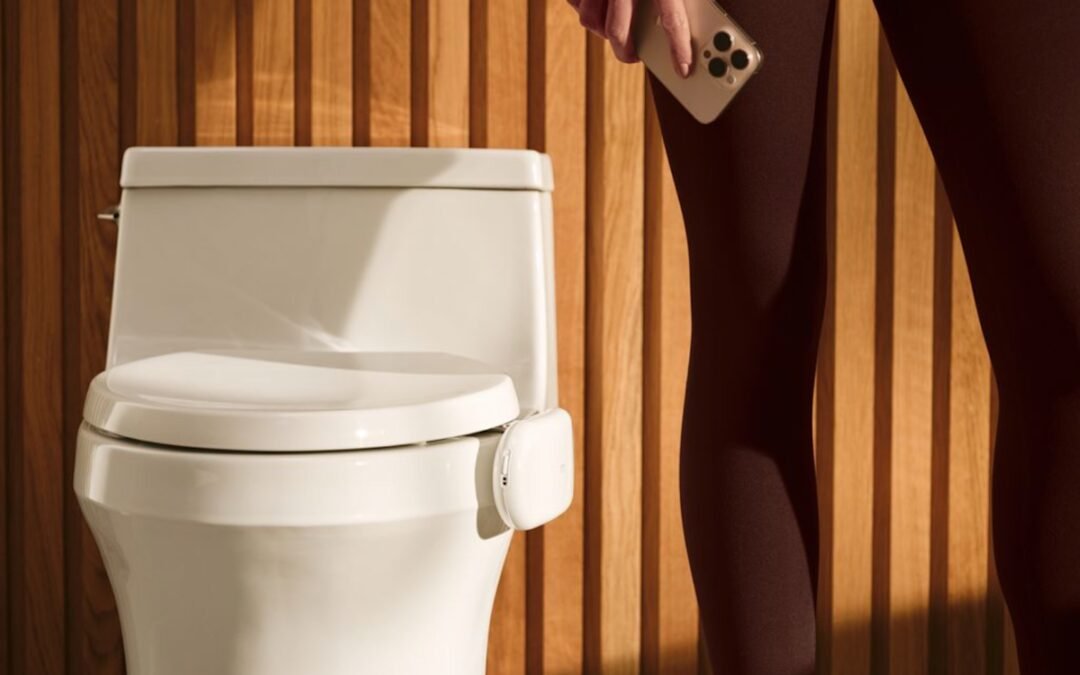
So let’s start with the basics: this high-tech toilet attachment comes from Kohler’s massive push into smart bathroom solutions. It’s not just a fancy seat warmer. The Dekoda packs an RGB camera, LED lighting, sensors, and AI — yes, literal artificial intelligence — all focused on monitoring your “output.” In less delicate terms, yes, it’s scanning your poop. But for good reason.
The idea is to capture data on your stool’s shape and consistency and use it to monitor digestive health. It’s not taking videos or tracking your skincare routine while you’re in there. It’s aiming to help detect early signs of issues like gastrointestinal disorders, dehydration, inflammation, or even flare-ups in conditions like IBS or Crohn’s disease.
Kind of wild, right? But also kind of genius.
Why Would Anyone Want a Smart Toilet Camera?
Let’s be real: nobody’s ever said, “You know what I need? A camera in my toilet.” But once you dive into the concept behind the Kohler Dekoda Smart, it actually makes sense — especially if you live with chronic digestive problems or are just health-curious like me.
Here’s the thing: our bodies are always giving us signals. But how often do we actually pay attention to our bowel movements unless something feels… off? Adding a tool that discreetly and consistently monitors what’s going on gives you the chance to catch patterns early, even before symptoms show up.
And between balancing work, trying to eat right, and remembering to hydrate (still bad at that), I actually kind of like the idea of having a health buddy built right into my bathroom routine.
Built for Privacy (Yes, Really)
Okay, but let’s address the obvious. A toilet camera? That’s enough to make anyone uneasy. But Kohler’s been very clear that Dekoda is not recording audio or video in a conventional sense. The RGB camera used is focused solely on detecting shapes and colors to assess stool quality. It doesn’t store identifying visuals, and it’s backed by end-to-end encryption that meets healthcare privacy standards.
It’s not live-streaming. It’s not sharing data with sketchy third parties. It’s not even making you look at images unless you really want to. In other words — yes, it’s a camera. But it’s probably the most boring, strictly-business camera you’ll ever own.
What It Can Do — And What It Can’t
So, what do you actually get out of this thing? From everything I’ve seen so far, here’s how the Kohler Dekoda Smart experience breaks down:
- Hands-off health tracking: It automatically syncs data to a connected app so you can view stool patterns — things like frequency, shape, and potential markers.
- Digestive insights: Over time, the AI learns what’s normal for YOU and flags when something looks off. Think of it as a bathroom-based check engine light.
- User recognition: If multiple people in your household use the same smart toilet, it learns to tell the difference. (Honestly both cool and slightly “Black Mirror,” if I’m being honest.)
- No contact or cleaning stress: It’s designed to stay clean with antimicrobial materials and low-maintenance components. And everything is designed to feel like a regular toilet visit — not a medical appointment.
That said, it’s not a replacement for your doctor. The data it collects isn’t a diagnosis; it’s a nudge to go get one if something looks wrong. It won’t tell you what you ate yesterday or why you’re bloated, but it just might help catch health concerns before you need to Google scary stuff in a panic at 2AM.
The Price Tag: Worth It or Way Too Much?
The Dekoda unit is reportedly priced around $600 when it officially releases. That’s not nothing — especially if you’re not already deep into the smart home world. But if you’ve already got a smart watch, a sleep tracker, or a fitness app logging your every step, why stop at the bathroom?
And for folks who genuinely struggle with digestive issues, it could be a game changer. Six hundred dollars sounds like a lot — but so do surprise ER visits and long waits for gastro specialists.
Would I Put This in My Bathroom?
Short answer? Maybe. If I’m being honest, it would take some getting used to. I’m pretty private about my bathroom routine (isn’t everyone?), but I also love the idea of putting tech toward genuinely helpful, health-forward uses. I’ve already got smart lights, an app to track my sleep, and a fridge that texts me when I’m out of oat milk. Maybe the bathroom’s just the next frontier.
The married side of me is also wondering how I’d explain to guests what the glowing seat in our downstairs powder room does. But maybe this isn’t a “company bathroom” thing. Maybe it’s like a fancy bidet — personal, low-key, and 90% for your own wellness.
Future of Bathroom Tech?
I think this is where we’re headed, honestly. Just like we once rolled our eyes at smart watches counting steps, we’ll probably all have some kind of health-monitoring bathroom gadget by 2030. I’d be lying if I said I wasn’t intrigued. And the idea of catching health issues early — or even just learning more about how your body responds to stress, food, or travel — is seriously appealing.
Technology’s getting more personal, whether we like it or not. And the Kohler Dekoda Smart toilet cam is proof that we’re now asking our tech to care about us — even when we’re at our most vulnerable and, honestly, unglamorous.
Final Thoughts: More Than Just a Gimmick?
Look, the optics of a toilet camera are weird. I laughed. I cringed. I texted the article to friends with wide-eyed emojis. But after reading more about the design, the privacy, and the actual health benefits, I’m coming around.
The Kohler Dekoda Smart system isn’t just about data for the sake of it. It’s about staying in tune with your body in a way that’s simple, discreet, and — dare I say — kind of revolutionary. If it helps catch something early or gives peace of mind to someone with a chronic condition, it’s not just smart. It’s meaningful.
Would you give it a shot? Or is this one smart home upgrade just a flush too far?
by TechNova | Oct 21, 2025 | Tech Insights
When I first read about the Kohler Dekoda Smart Toilet Camera for Bathrooms, my eyebrows did one of those cartoonish jumps. A camera? Pointed at a toilet? Is this real life? But as I kept reading, I realized this isn’t your everyday smart home gadget — it’s part of a growing trend to monitor health data in ways we never considered before. The Kohler Dekoda Smart isn’t about spying or recording (thankfully), but about insight. And dare I say it — it’s a bit futuristic.
What Exactly Is the Kohler Dekoda Smart About?
So let’s start with the basics: this high-tech toilet attachment comes from Kohler’s massive push into smart bathroom solutions. It’s not just a fancy seat warmer. The Dekoda packs an RGB camera, LED lighting, sensors, and AI — yes, literal artificial intelligence — all focused on monitoring your “output.” In less delicate terms, yes, it’s scanning your poop. But for good reason.
The idea is to capture data on your stool’s shape and consistency and use it to monitor digestive health. It’s not taking videos or tracking your skincare routine while you’re in there. It’s aiming to help detect early signs of issues like gastrointestinal disorders, dehydration, inflammation, or even flare-ups in conditions like IBS or Crohn’s disease.
Kind of wild, right? But also kind of genius.
Why Would Anyone Want a Smart Toilet Camera?
Let’s be real: nobody’s ever said, “You know what I need? A camera in my toilet.” But once you dive into the concept behind the Kohler Dekoda Smart, it actually makes sense — especially if you live with chronic digestive problems or are just health-curious like me.
Here’s the thing: our bodies are always giving us signals. But how often do we actually pay attention to our bowel movements unless something feels… off? Adding a tool that discreetly and consistently monitors what’s going on gives you the chance to catch patterns early, even before symptoms show up.
And between balancing work, trying to eat right, and remembering to hydrate (still bad at that), I actually kind of like the idea of having a health buddy built right into my bathroom routine.
Built for Privacy (Yes, Really)
Okay, but let’s address the obvious. A toilet camera? That’s enough to make anyone uneasy. But Kohler’s been very clear that Dekoda is not recording audio or video in a conventional sense. The RGB camera used is focused solely on detecting shapes and colors to assess stool quality. It doesn’t store identifying visuals, and it’s backed by end-to-end encryption that meets healthcare privacy standards.
It’s not live-streaming. It’s not sharing data with sketchy third parties. It’s not even making you look at images unless you really want to. In other words — yes, it’s a camera. But it’s probably the most boring, strictly-business camera you’ll ever own.
What It Can Do — And What It Can’t
So, what do you actually get out of this thing? From everything I’ve seen so far, here’s how the Kohler Dekoda Smart experience breaks down:
- Hands-off health tracking: It automatically syncs data to a connected app so you can view stool patterns — things like frequency, shape, and potential markers.
- Digestive insights: Over time, the AI learns what’s normal for YOU and flags when something looks off. Think of it as a bathroom-based check engine light.
- User recognition: If multiple people in your household use the same smart toilet, it learns to tell the difference. (Honestly both cool and slightly “Black Mirror,” if I’m being honest.)
- No contact or cleaning stress: It’s designed to stay clean with antimicrobial materials and low-maintenance components. And everything is designed to feel like a regular toilet visit — not a medical appointment.
That said, it’s not a replacement for your doctor. The data it collects isn’t a diagnosis; it’s a nudge to go get one if something looks wrong. It won’t tell you what you ate yesterday or why you’re bloated, but it just might help catch health concerns before you need to Google scary stuff in a panic at 2AM.
The Price Tag: Worth It or Way Too Much?
The Dekoda unit is reportedly priced around $600 when it officially releases. That’s not nothing — especially if you’re not already deep into the smart home world. But if you’ve already got a smart watch, a sleep tracker, or a fitness app logging your every step, why stop at the bathroom?
And for folks who genuinely struggle with digestive issues, it could be a game changer. Six hundred dollars sounds like a lot — but so do surprise ER visits and long waits for gastro specialists.
Would I Put This in My Bathroom?
Short answer? Maybe. If I’m being honest, it would take some getting used to. I’m pretty private about my bathroom routine (isn’t everyone?), but I also love the idea of putting tech toward genuinely helpful, health-forward uses. I’ve already got smart lights, an app to track my sleep, and a fridge that texts me when I’m out of oat milk. Maybe the bathroom’s just the next frontier.
The married side of me is also wondering how I’d explain to guests what the glowing seat in our downstairs powder room does. But maybe this isn’t a “company bathroom” thing. Maybe it’s like a fancy bidet — personal, low-key, and 90% for your own wellness.
Future of Bathroom Tech?
I think this is where we’re headed, honestly. Just like we once rolled our eyes at smart watches counting steps, we’ll probably all have some kind of health-monitoring bathroom gadget by 2030. I’d be lying if I said I wasn’t intrigued. And the idea of catching health issues early — or even just learning more about how your body responds to stress, food, or travel — is seriously appealing.
Technology’s getting more personal, whether we like it or not. And the Kohler Dekoda Smart toilet cam is proof that we’re now asking our tech to care about us — even when we’re at our most vulnerable and, honestly, unglamorous.
Final Thoughts: More Than Just a Gimmick?
Look, the optics of a toilet camera are weird. I laughed. I cringed. I texted the article to friends with wide-eyed emojis. But after reading more about the design, the privacy, and the actual health benefits, I’m coming around.
The Kohler Dekoda Smart system isn’t just about data for the sake of it. It’s about staying in tune with your body in a way that’s simple, discreet, and — dare I say — kind of revolutionary. If it helps catch something early or gives peace of mind to someone with a chronic condition, it’s not just smart. It’s meaningful.
Would you give it a shot? Or is this one smart home upgrade just a flush too far?
