
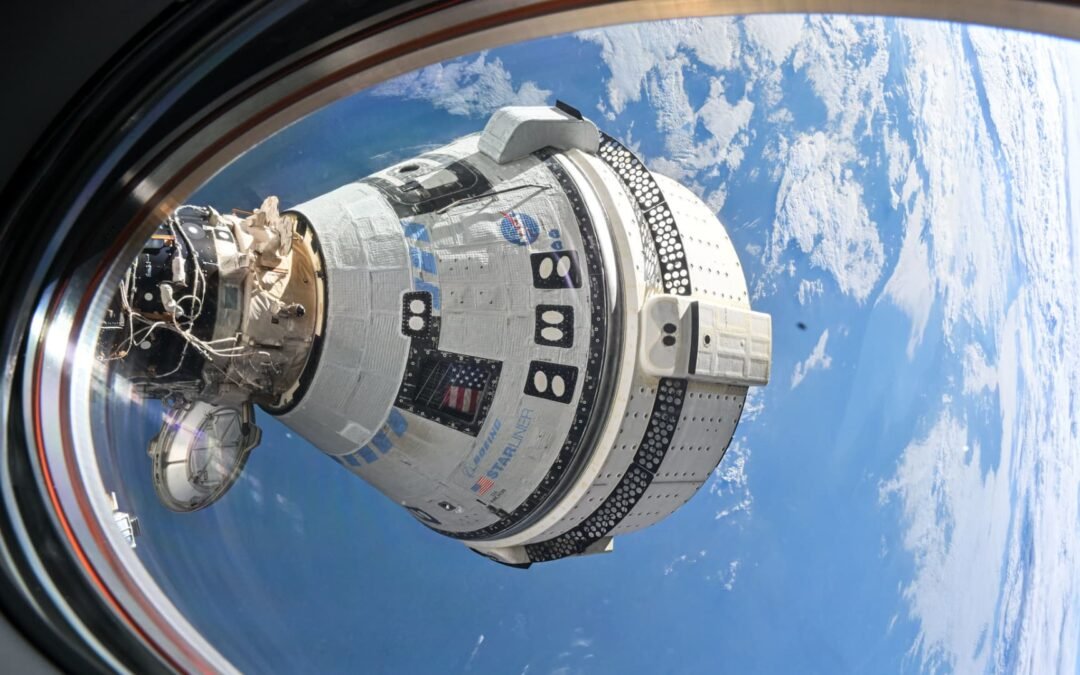
The Boeing Starliner Program is facing an eye-watering setback—$2 billion in losses, to be exact. This ambitious project, meant to give NASA another ride to the International Space Station (ISS), has been riddled with delays, technical issues, and a price tag that keeps climbing. If you’ve been following the journey of Starliner, you know it hasn’t been smooth sailing… or, in this case, smooth spacefaring.
What’s Going on With the Boeing Starliner Program?
Boeing set out to create a reliable crew spacecraft, but things haven’t gone as planned. The Starliner program initially looked like the perfect complement to SpaceX’s Crew Dragon. After all, NASA didn’t want to rely on a single company to ferry astronauts to the ISS. But over the years, design flaws, test failures, and costly fixes have turned what should’ve been a dependable spacecraft into a serious financial burden.
Now, with losses tallying up to $2 billion, one has to wonder—how did it get to this point? And more importantly, what does this mean for the future of Boeing and NASA?
The Price of Space Exploration
Space travel is expensive. That’s no secret. But even for an industry where billion-dollar budgets aren’t uncommon, Boeing’s Starliner losses stand out. There were high hopes when Boeing secured its NASA contract, competing against Elon Musk’s SpaceX. The idea was simple: two companies, two spacecraft, providing redundancy and flexibility for U.S. space travel.
But while SpaceX has been flying operational missions for years, Boeing is still dealing with issues before Starliner can prove itself. Several failed test missions and mechanical problems have forced repeated redesigns, further ballooning costs. What started as an exciting new project has turned into a financial drain.
Why Is the Boeing Starliner Program Struggling?
Boeing isn’t new to spaceflight. This is a company with decades of experience building rockets and spacecraft. So why is the Starliner having such a hard time?
- Software Failures: One early test flight nearly ended in disaster due to software malfunctions that made Starliner miss its intended orbit.
- Hardware Issues: Valve problems and parachute concerns forced Boeing to postpone key test flights.
- Rework and Delays: Every flaw detected means time and money spent fixing it. The more issues surfaced, the further down the timeline Starliner slipped.
- Competition Pressure: While Boeing has been troubleshooting, SpaceX’s Crew Dragon has flown multiple missions, proving its reliability and making Starliner seem redundant.
Imagine you spent years building a dream car, only to have it constantly break down at the worst moments. That’s what Boeing is dealing with—except their dream car is a spaceship, and the breakdowns cost billions.
What Does This Mean for NASA?
NASA wanted two commercial crew spacecraft to avoid reliance on SpaceX alone. But with Boeing struggling, that backup plan isn’t looking as strong. Starliner was supposed to be flying operational missions by now, yet every delay makes NASA question whether Boeing can deliver.
It also impacts future contracts. NASA isn’t just picking partners for today; they’re thinking about missions to the Moon, Mars, and beyond. If Boeing can’t get Starliner off the ground reliably, will they be trusted with more ambitious projects?
Can Boeing Turn Things Around?
If history tells us anything, it’s that Boeing doesn’t give up easily. The company has deep pockets, decades of aerospace experience, and a strong incentive to make Starliner succeed. They can’t afford another failure—not just financially, but for their reputation in spaceflight.
There’s also the NASA partnership to consider. The space agency still wants this to work, so Boeing isn’t completely on its own. The question is, how much longer can Boeing sustain these losses before considering if Starliner is worth the effort?
The Bigger Picture for Space Exploration
Boeing isn’t the only player in the space race. Private companies are pushing the boundaries of what’s possible, governments are investing in next-gen space technology, and the idea of human missions to Mars is becoming less of a sci-fi dream and more of a real goal.
So where does Boeing fit in? Despite current setbacks, Starliner still has potential. If Boeing manages to fix its issues and prove reliability, it could still play a vital role in space travel. But right now, the company is in a tough spot, and the pressure is higher than ever.
Final Thoughts
Spaceflight isn’t easy. Boeing’s been learning that the hard way with Starliner. The $2 billion setback is a painful dent in their budget, but it doesn’t have to be the end of the road. The real question is whether Starliner will eventually soar or remain a cautionary tale of space exploration gone wrong.
What do you think? Should Boeing keep pushing forward, or is it time to cut their losses? Space is tough, but sometimes, the toughest challenges lead to the biggest breakthroughs.